Exactly as the exam asked them. Choose an option: you will see at once if it is right, and the small facts behind the question.
Take your time. Answer, see why, and reattempt any question as often as you like.
10 questions · 7 minutes · 40 seconds a question. Once you move on, you can’t come back, and answers show only at the end. Just like the real hall.
Whole test0:00
This question40
#59 · NTA UGC-NET/JRF · Nov.2017
which one of the following statements is very correct in context of the concept of growth pole and growth centres?
Show answer
Answer: option (3): Higher Growth oder Centre are located far away while lower order growth centres are located closer to one and an other.
Solution
Why is this the answer?
Like central places, higher-order growth poles are few and far apart, while lower-order growth centres are many and closer together.
What about each option?
Spacing differs by order
Reversed
Right: higher far apart, lower closer
A hierarchy of spacing exists
How do I remember it?
💡 Big centres are rare; small ones are everywhere.
#60 · NTA UGC-NET/JRF · Jan.2017
Which one of the following letters represents the total number of settlements of a certain order served by a central place of the next higher order ?
Show answer
Answer: option (1): K
Solution
Why is this the answer?
Christaller's K is the number of lower-order settlements served by one centre of the next higher order (counting itself).
What about each option?
Right: K
Not his symbol
Not his symbol
Not his symbol
How do I remember it?
💡 K = how many a centre serves.
#61 · NTA UGC-NET/JRF · Jan.2017
Which one of the following models based on the study of human ecology ?
Show answer
Answer: option (1): Burges and park's concentric zone model
Solution
Why is this the answer?
Burgess and Park's concentric zone model came from the Chicago School of human ecology, which saw city zones as the result of competition and succession.
What about each option?
Right: Burgess and Park
Industrial location
Spread of innovations
Migration stages
How do I remember it?
💡 Chicago: the city as an ecological community.
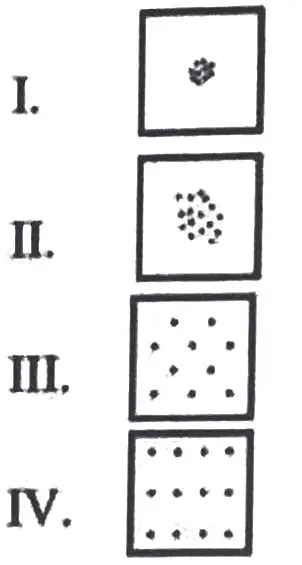
#62 · NTA UGC-NET/JRF · Jan.2017
Macth the following List-I with List-II and select the correct answer from the codes given below :
List-I (Distribution of Settelment)
List-II (Pattern)
A. Perfect
B. Cluster
C. Random
D. Uniform
I
II
III
IV
(1)
B
C
A
D
(2)
B
C
D
A
(3)
B
A
D
C
(4)
A
B
C
D
Show answer
Answer: option (2)
Solution
Why is this the answer?
The lists and codes of this match question were printed as a table in the original paper. The keyed answer is option (2). The four point patterns are drawn in the original; the code reads cluster, random, uniform, perfect.
What about each option?
Not the keyed code
Right: option (2)
Not the keyed code
Not the keyed code
How do I remember it?
💡 Fix the pair you are surest of, then strike out the codes that disagree.
#63 · NTA UGC-NET/JRF · Jan.2017
Assertion (A) :Urbanisation is a defining phenomenon of this century and the devloping countries are at the focus of this transformaton
Reason (R) : The urban shift has happend in the last few dacadeslargly due to rapid growth of mega cities in the developing countries.
Show answer
Answer: option (3): (A) is correct but (R) is false
Solution
Why is this the answer?
Urbanisation does define this century, and developing countries are at its centre. The key marks R false: most urban growth in developing countries happens in small and medium towns, not mainly in megacities.
What about each option?
R is false
R is false
Right: A correct, R false
A is correct
How do I remember it?
💡 Most new city dwellers live in small and medium towns.
#65 · NTA UGC-NET/JRF · Jan.2017
Which one of the following is not in conformity with the central place theory ?
Show answer
Answer: option (3): Ubiquities and localized raw materials.
Solution
Why is this the answer?
Ubiquitous and localised raw materials are Weber's industrial location terms. Central place theory is about services, hinterlands, hierarchy and hexagons.
What about each option?
Fits the theory
Fits the theory
Right: Weber's idea, not central place theory
Fits the theory
How do I remember it?
💡 Weber = raw materials; Christaller = services.
#67 · NTA UGC-NET/JRF · July.2016
Which one of the following terms denotes the net population increase of towns and cities?
Show answer
Answer: option (1): Urban Growth
Solution
Why is this the answer?
Urban growth is the net increase in the number of people in towns and cities. Urbanisation is the rise in the urban share of the total.
What about each option?
Right: urban growth
All people, not just urban
The share, not the net number
A place, not a process
How do I remember it?
💡 Growth = more city people; urbanisation = bigger city share.
#68 · NTA UGC-NET/JRF · July.2016
Which one of the following scholars believed that "every celebrate action must start the mind, the realm of thought. It must be conceived and rehearsed in the realm of thought before itcabn take place in the physical......"
Show answer
Answer: option (4): Benton Mckaye
Solution
Why is this the answer?
The key credits Benton MacKaye, the American regional planner (founder of the Appalachian Trail idea), with this view that every action must first be planned in the mind.
What about each option?
A city historian, not keyed
A planner, not keyed
A sanitary reformer, not keyed
Right: Benton MacKaye
How do I remember it?
💡 Plan in thought before building on the ground.
#69 · NTA UGC-NET/JRF · July.2016
Match List -I with List-II
List-I
List-II
I
Green Village
A
Villages which have developed at an intersection of roads
II
Cruciform Village
B
With houses and church clustered around a small village green
III
Dispersed Village
C
Found along routeways or were conditions have impeded a lateral development of the setlement
IV
Street Village
D
Isolated farms and dwellings are scattered irregularly thro-ughout countryside
Select the correct answer from the codes given below:
(a)
(b)
(c)
(d)
A.
3
2
1
4
B.
2
3
4
1
C.
1
2
3
4
D.
2
1
4
3
Show answer
Answer: option (4)
Solution
Why is this the answer?
A green village clusters around a village green (B, 2); a cruciform village grows at a road crossing (A, 1); a dispersed village is scattered farms (D, 4); a street village runs along a route (C, 3). Code D: 2, 1, 4, 3.
What about each option?
Wrong order
Wrong order
Wrong order
Right: 2, 1, 4, 3
How do I remember it?
💡 Green = around a lawn; cruciform = cross-roads.
#71 · NTA UGC-NET/JRF · July.2016
Which one of the following criteria is used by Census of India 2011 to define the town ?
Show answer
Answer: option (2): Population Density
Solution
Why is this the answer?
For census towns, the 2011 Census used population (5,000), density (400 per sq km) and male non-farm work (75%). Of these options, only density is a criterion.
What about each option?
Not a criterion
Right: population density
Not a criterion
Not a criterion
How do I remember it?
💡 Size, density, work: the three tests.
Question source: NTA UGC-NET/JRF and state Assistant Professor exam papers. The flip cards and notes here are written afresh.