Exactly as the exam asked them. Choose an option: you will see at once if it is right, and the small facts behind the question.
Take your time. Answer, see why, and reattempt any question as often as you like.
10 questions · 7 minutes · 40 seconds a question. Once you move on, you can’t come back, and answers show only at the end. Just like the real hall.
Whole test0:00
This question40
#48 · NTA UGC-NET/JRF · July.2018
Which one of the following statements correctly depicts the threshold according to Central Place Modal?
Show answer
Answer: option (3): Minimum number of people needed to support a service.
Solution
Why is this the answer?
The threshold is the minimum number of people needed to keep a service in business.
What about each option?
Not a definition
That is the range
Right: minimum population for a service
Not the threshold
How do I remember it?
💡 Threshold = enough customers to survive.
#49 · NTA UGC-NET/JRF · July.2018
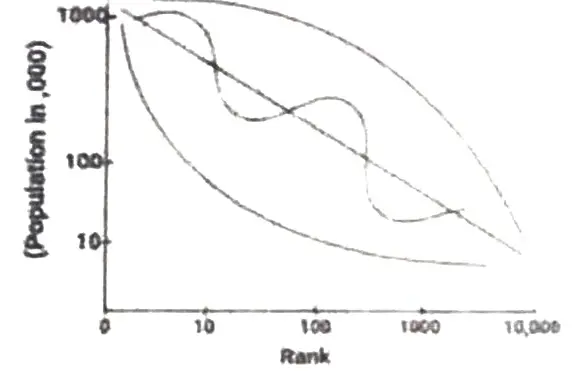
Which one of the following code is correctly depicting the pattern of distribution of population among cities by 'd' curve in the given graph?
Show answer
Answer: option (3): Binary
Solution
Why is this the answer?
The graph is in the original. Curve d shows two cities of similar large size at the top, then a drop: a binary pattern, as in countries with twin leading cities.
What about each option?
One city far ahead
A stepped curve
Right: binary
A smooth straight line on log scales
How do I remember it?
💡 Binary = two leaders, like Sydney and Melbourne.
#50 · NTA UGC-NET/JRF · July.2018
List-I
(SettelmentAligment)
List-II (Settelment Pattern)
(i)Uniform (ii) Star Shaped
(iii) Linear (iv) Cluster
(a)
(b)
(c)
(d)
(1)
(ii)
(iii)
(iv)
(i)
(2)
(iii)
(iv)
(ii)
(i)
(3)
(i)
(ii)
(iii)
(iv)
(4)
(iv)
(iii)
(ii)
(i)
Show answer
Answer: option (2)
Solution
Why is this the answer?
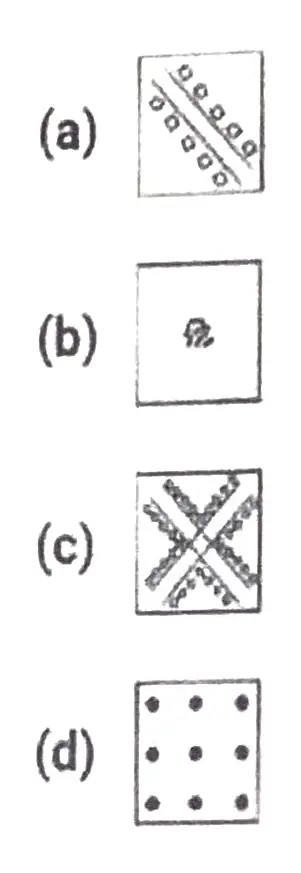
The lists and codes of this match question were printed as a table in the original paper. The keyed answer is option (2). The settlement shapes are drawn in the original; the code reads linear, cluster, star-shaped, uniform.
What about each option?
Not the keyed code
Right: option (2)
Not the keyed code
Not the keyed code
How do I remember it?
💡 Fix the pair you are surest of, then strike out the codes that disagree.
#51 · NTA UGC-NET/JRF · July.2018
Which one of the following statement indicates to the potential use of a service at a location according to Gravity a model?
Show answer
Answer: option (3): Direct relationship to population size and inverse relationship to distance.
Solution
Why is this the answer?
In the gravity model, interaction rises with population size and falls with distance (usually its square).
What about each option?
Distance reduces use
Population raises use
Right: direct to size, inverse to distance
Reversed
How do I remember it?
💡 Bigger pulls more, farther pulls less.
#52 · NTA UGC-NET/JRF · Nov.2017
Which one of the following is correct statement for Patna city in Bihar and Kolkata city in West Bengal?
Show answer
Answer: option (4): Primate City
Solution
Why is this the answer?
Patna in Bihar and Kolkata in West Bengal are each far larger than the next city of their state, so each is a primate city.
What about each option?
Edge cities are new suburban job hubs
Kolkata is regional, not a world city in this sense
Not the shared feature
Right: primate city
How do I remember it?
💡 State capital far ahead of number two.
#53 · NTA UGC-NET/JRF · Nov.2017
Which one of the following does not belong to the Explotive Model of Urban Structure propounded by William Bunge?
Show answer
Answer: option (3): central of business district
Solution
Why is this the answer?
William Bunge's exploitive model divides the city into the city of death (poor core), the city of need, and the city of superfluity (rich suburbs). The CBD is not one of his three.
What about each option?
Part of his model
Part of his model
Right: not part of his model
Part of his model
How do I remember it?
💡 Death, need, superfluity: Bunge's three cities.
#54 · NTA UGC-NET/JRF · Nov.2017
Match List -I with List-II
List-I
List-II
I
Site of human
A
Movement due to opportunity Settlement of employment
II
Situation of human settlement
B
The physical and cultural characterstics and atributes of a place
III
Pull factor in
C
The relative location with Migration particulaers reference to the significnce to a place
IV
Migration field
D
Area that dominate a Locale in and out migration pattern
Select the correct answer from the codes given below:
(a)
(b)
(c)
(d)
A.
1
4
2
3
B.
2
3
1
4
C.
3
2
4
1
D.
4
2
1
3
Show answer
Answer: option (2)
Solution
Why is this the answer?
Site is a place's own physical and cultural traits (B, 2); situation is its relative location (C, 3); a pull factor is movement towards jobs (A, 1); a migration field is the area that dominates a place's in and out flows (D, 4). Code B: 2, 3, 1, 4.
What about each option?
Wrong order
Right: 2, 3, 1, 4
Wrong order
Wrong order
How do I remember it?
💡 Site = the spot; situation = its neighbourhood.
#55 · NTA UGC-NET/JRF · Nov.2017
Match List -I with List-II
List-I
List-II
I
Central City
A
Continous Builtup landscape with high density of building with no reference to Political boundary.
II
Network City
B
Areas outside city with urban characterstics
III
Urban
C
Urban area contained within Influence Zone the official boundries of the main around which suburbs Develops.
IV
Urbanized Area
D
Two or more independent but complementrycities Having high speed transport corridors
(a)
(b)
(c)
(d)
A.
1
2
4
3
B.
3
4
2
1
C.
2
4
3
1
D.
4
2
1
3
Show answer
Answer: option (2)
Solution
Why is this the answer?
The central city is the area inside the official limits (C, 3); a network city is two or more complementary cities linked by fast corridors (D, 4); the urban influence zone is the urban-like area outside the city (B, 2); the urbanised area is the continuous built-up landscape regardless of boundaries (A, 1). Code B: 3, 4, 2, 1.
What about each option?
Wrong order
Right: 3, 4, 2, 1
Wrong order
Wrong order
How do I remember it?
💡 Central = inside the line; urbanised = wherever buildings run.
#56 · NTA UGC-NET/JRF · Nov.2017
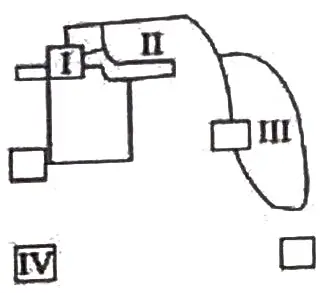
Locate the following places in Multiple Nuclei theory of urban stucture in the figure and macth it with list the given beolw :
List :
1. Wholesale and Light Manufacturing
2. High class residenrtial
3. Medium class residential
4. Industrial Suburb
(a)
(b)
(c)
(d)
A.
2
3
1
4
B.
1
2
3
4
C.
1
3
2
4
D.
3
4
1
2
Show answer
Answer: option (3)
Solution
Why is this the answer?
The lists and codes of this match question were printed as a table in the original paper. The keyed answer is option (3). The labelled nuclei are in the figure in the original.
What about each option?
Not the keyed code
Not the keyed code
Right: option (3)
Not the keyed code
How do I remember it?
💡 Fix the pair you are surest of, then strike out the codes that disagree.
#58 · NTA UGC-NET/JRF · Nov.2017
Assertion (A) :Urban agglomiration and metropolitan cities are growing rapidly in India.
Reason (R) :Satellite towns are not sufficiently and significantly developed to release the pressure of urban population.
Show answer
Answer: option (1): Both (A) and (R) are true and (R) is correct explanation of (A)
Solution
Why is this the answer?
Indian cities and agglomerations are growing fast, and one reason is that satellite towns have not developed enough to take the overflow. The key accepts R as the explanation.
What about each option?
Right: both true, R explains A
The key accepts R as the explanation
R is also true
A is also true
How do I remember it?
💡 No strong satellites, so the core keeps swelling.
Question source: NTA UGC-NET/JRF and state Assistant Professor exam papers. The flip cards and notes here are written afresh.