Exactly as the exam asked them. Choose an option: you will see at once if it is right, and the small facts behind the question.
Take your time. Answer, see why, and reattempt any question as often as you like.
10 questions · 7 minutes · 40 seconds a question. Once you move on, you can’t come back, and answers show only at the end. Just like the real hall.
Whole test0:00
This question40
#76 · NTA UGC-NET/JRF · Dec.2015
The 'Mobility Transition Model' of migration was given by :
Show answer
Answer: option (4): Zelinsky, W.
Solution
Why is this the answer?
Wilbur Zelinsky's mobility transition (1971) links each stage of the demographic transition to a typical pattern of migration.
What about each option?
Clark worked on residential mobility, not this model
Lee gave push–pull with intervening obstacles
Ravenstein gave the laws of migration
Right: Zelinsky
How do I remember it?
💡 Zelinsky = demographic transition, but for moving.
#77 · NTA UGC-NET/JRF · Dec.2015
Which one of the following cities is known as the 'Mile City' ?
Show answer
Answer: option (3): Denver
Solution
Why is this the answer?
Denver is the Mile High City: its official elevation is exactly one mile (5,280 ft) above sea level.
What about each option?
The Emerald City
The Valley of the Sun
Right: Denver
Not called this
How do I remember it?
💡 Denver's capitol has a step marked one mile high.
#78 · NTA UGC-NET/JRF · Dec.2015
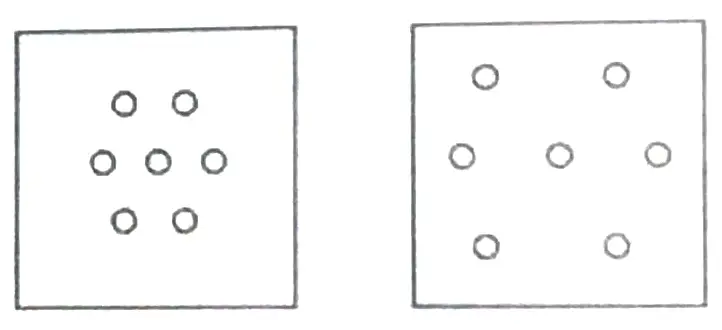
Which one of the following codes is correct to explain the base of given distribution of settelments of an area?
Show answer
Answer: option (2): Spacing
Solution
Why is this the answer?
The figure in the original shows settlements spread across an area; the pattern is read from the spacing between them (nearest-neighbour distance). The image is in the "see original" view.
What about each option?
Density counts how many, not the pattern
Right: spacing
Not a measure of distribution
Size is about each settlement, not the pattern
How do I remember it?
💡 Pattern = how far apart: clustered, random or regular.
#79 · NTA UGC-NET/JRF · Dec.2015
Which one of the following does not refer to 'Primate City'?
Show answer
Answer: option (2): Rabat
Solution
Why is this the answer?
A primate city is a capital far bigger than any other city in the country. Harare, Windhoek and Gaborone dominate their countries, but Rabat is smaller than Casablanca, so Morocco's capital is not its primate city.
What about each option?
Primate city of Zimbabwe
Right: Casablanca, not Rabat, is Morocco's largest city
Primate city of Namibia
Primate city of Botswana
How do I remember it?
💡 Morocco's money is in Casablanca, its government in Rabat.
#80 · NTA UGC-NET/JRF · Dec.2015
Who proposed the 'Theory of Intervening Opportunities ?
A. B.Thomas
B.B.Benjamin
C. S.Stouffer
D. R.Tomlinson
Show answer
Answer: option (3)
Solution
Why is this the answer?
Samuel Stouffer (1940) proposed that the number of people moving a distance depends on the opportunities at that distance and inversely on the opportunities in between.
What about each option?
Not the author
Not the author
Right: S. Stouffer
Not the author
How do I remember it?
💡 Stouffer: a nearer chance stops you going farther.
#81 · NTA UGC-NET/JRF · Dec.2015
How physiological density of populatyion is defined?
Show answer
Answer: option (3): A ratio between total population and total cuyltivated area
Solution
Why is this the answer?
Physiological density = total population ÷ cultivated (arable) land. It shows pressure on the land that feeds people.
What about each option?
That is arithmetic density
Not the standard definition
Right: population per cultivated area
Option (2) is not a definition of it
How do I remember it?
💡 Physiological = mouths per farm hectare.
#82 · NTA UGC-NET/JRF · Dec.2015
As per the estimate Of 2014, how much population of the world is found in Africa?
Show answer
Answer: option (3): About 16%
Solution
Why is this the answer?
In 2014 Africa had about 1.14 billion of the world's 7.2 billion people, about 16%.
What about each option?
Too low
Too low
Right: about 16%
Africa reached about 18% only around 2022
How do I remember it?
💡 Africa's share keeps rising: 16% then, near 18% now.
#83 · NTA UGC-NET/JRF · Dec.2015
Which one of the following techniques would you consider for estimation of requirments of population in an area for planning allocations?
Show answer
Answer: option (3): Population projection
Solution
Why is this the answer?
To plan schools, water or hospitals for the future, planners first project the future population.
What about each option?
Measures the limit, not the expected need
Judges a project, not the need
Right: population projection
Describes city sizes, not need
How do I remember it?
💡 Plan for the people who will be there.
#84 · NTA UGC-NET/JRF · June2015
Which of the following stages of demographic transition indicate the state of under development?
Show answer
Answer: option (1): High stationary stage
Solution
Why is this the answer?
The high stationary stage, with high births and high deaths, marks a traditional, under-developed society.
What about each option?
Right: high stationary
Development has begun
Development is well under way
Developed societies
How do I remember it?
💡 Stage 1 = poorest, both rates high.
#85 · NTA UGC-NET/JRF · June2015
Which one of the concept relates population size to the land area with a view to assess pressure of population upon the resources of the area ?
Show answer
Answer: option (2): Population Density
Solution
Why is this the answer?
Population density relates the number of people to land area, as a first measure of pressure on resources. Agricultural and physiological density are refinements of it.
What about each option?
Growth is change over time
Right: population density
A refinement using farm population
A refinement using cultivated land
How do I remember it?
💡 Density = people ÷ area.
Question source: NTA UGC-NET/JRF and state Assistant Professor exam papers. The flip cards and notes here are written afresh.