Exactly as the exam asked them. Choose an option: you will see at once if it is right, and the small facts behind the question.
Take your time. Answer, see why, and reattempt any question as often as you like.
10 questions · 7 minutes · 40 seconds a question. Once you move on, you can’t come back, and answers show only at the end. Just like the real hall.
Whole test0:00
This question40
#88 · Assistant Professor paper · Rajasthsan SET 2023
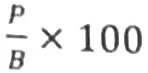
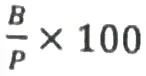
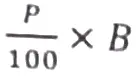
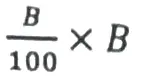
‘What is the formula for calculating the crude birth rate ?
(A)
(B)
(C)
(D)
Show answer
Answer: option (2)
Solution
Why is this the answer?
The crude birth rate is the number of live births in a year divided by the mid-year population, multiplied by 1,000. The four formulas were printed as images; the key is option (B).
What about each option?
See the original paper
Right: (B), births ÷ mid-year population × 1,000
See the original paper
See the original paper
How do I remember it?
💡 CBR = births per 1,000 people per year.
#89 · Assistant Professor paper · Rajasthsan SET 2023
What is the significance of Population pyramid ?
Show answer
Answer: option (4): Help to study of age and sex ratio
Solution
Why is this the answer?
A population pyramid shows the age and sex structure of a population: males on one side, females on the other, in age groups from young at the base to old at the top.
What about each option?
Shown on a density map
Shown by a growth curve
Shown on a dot map
Right: age and sex structure
How do I remember it?
💡 Pyramid shape tells the story: wide base = young; narrow base = ageing.
#90 · Assistant Professor paper · UP GDC 2021
‘The Mobility Transition Theory' of migration was propounded by
Show answer
Answer: option (4): Zelinsky
Solution
Why is this the answer?
The mobility transition theory of migration was proposed by Wilbur Zelinsky.
In India, the share of female migration as compared to male migration Is higher in which of the following migration stream ?
Show answer
Answer: option (1): Rural to rural
Solution
Why is this the answer?
In India, female migration far outnumbers male migration in the rural-to-rural stream, mostly because women move to their husbands' villages after marriage.
What about each option?
Right: rural to rural
Men dominate this stream
More balanced
Small stream
How do I remember it?
💡 Marriage migration is mostly village to village.
#92 · Assistant Professor paper · UP GDC 2021
The long term objective of the National Population Policy (2000), is to achieve stable population by which year ?
Show answer
Answer: option (4): 2045
Solution
Why is this the answer?
The National Population Policy 2000 set a long-term aim of a stable population by 2045, with a medium-term aim of replacement fertility (TFR 2.1) by 2010.
What about each option?
Too early
Too early
Too early
Right: 2045
How do I remember it?
💡 NPP 2000: TFR 2.1 by 2010, stable by 2045.
#93 · Assistant Professor paper · UP GDC 2021
Who among the following divided the world into population-resource regions ?
Show answer
Answer: option (4): Edward Ackerman
Solution
Why is this the answer?
Edward Ackerman divided the world into population–resource regions.
What about each option?
Transition model
Five stages
Transition theory
Right: Ackerman
How do I remember it?
💡 Ackerman = people + resources + technology.
#94 · Assistant Professor paper · UP GDC 2021
The principal-of optimum population was first presented by who among the following ?
Show answer
Answer: option (1): Sidgwick
Solution
Why is this the answer?
The idea of an optimum population was first put forward by Henry Sidgwick (1883). Edwin Cannan developed it fully, and Robbins and Carr-Saunders refined it later.
What about each option?
Right: Sidgwick, first
Developed it, slightly later
Refined it later
Refined it later
How do I remember it?
💡 Sidgwick first, Cannan fuller.
#95 · Assistant Professor paper · UP GDC 2017
Who among the following propounded the logistic curve principle of population growth ?
Show answer
Answer: option (3): Pearl Reed
Solution
Why is this the answer?
Raymond Pearl and Lowell Reed (1920) applied the logistic (S-shaped) curve to population growth: slow growth, then rapid growth, then levelling off.
What about each option?
Wrote on hunger and population
Proposed a fertility–density idea
Right: Pearl and Reed
Not this principle
How do I remember it?
💡 Logistic curve = S-curve of growth.
#97 · Assistant Professor paper · UP GDC 2017
The optimum population model was pioneered By -
(a). Carr Saunders
(b)- George M. Budvel
(c) Warren Thompson
(d) Robert Boyd
Show answer
Answer: option (1)
Solution
Why is this the answer?
Among the names given, the key credits A. M. Carr-Saunders with pioneering the optimum population model; he worked out the idea in The Population Problem (1922).
What about each option?
Right: Carr-Saunders
Not this model
Transition theory
Not this model
How do I remember it?
💡 Carr-Saunders 1922: The Population Problem.
#98 · Assistant Professor paper · UP GDC 2017
According to Edward Ackerman’s classification of population — Resource Regions, Israel comes under the category :
Show answer
Answer: option (2): The European Type Regions
Solution
Why is this the answer?
In Ackerman's scheme, the European type has high population relative to resources but advanced technology, and makes up for it through trade. The key places Israel in this European type.
What about each option?
Low population, rich resources, high technology
Right (as keyed): European type
Low population, low technology
High population, low technology
How do I remember it?
💡 Europe type = many people, high tech, trade for resources.
Question source: NTA UGC-NET/JRF and state Assistant Professor exam papers. The flip cards and notes here are written afresh.